
Nepal Floods 2026 have created a serious situation across several parts of the country, with massive flooding and flash floods causing widespread damage. Homes, roads, bridges and other important infrastructure have been affected, while rescue teams continue working to help people trapped in flood-hit areas.
Rescue operations are still underway, with authorities working to evacuate people from affected areas. Several people have already been rescued, while search operations continue for those who are still missing.
What Caused the Floods in Nepal?
The recent flooding in Nepal was not caused by ordinary rainfall alone. Reports indicate that the disaster is linked to sudden changes in the Himalayan region, including the movement of ice, rocks and debris in high-altitude areas.
A large amount of water and debris entered the river system, causing water levels to rise rapidly in downstream areas.
This type of flash flood can be extremely dangerous because water levels can increase within a very short period of time. People living near rivers and in low-lying areas may have very little time to move to safer locations.
Latest Nepal Flood Situation
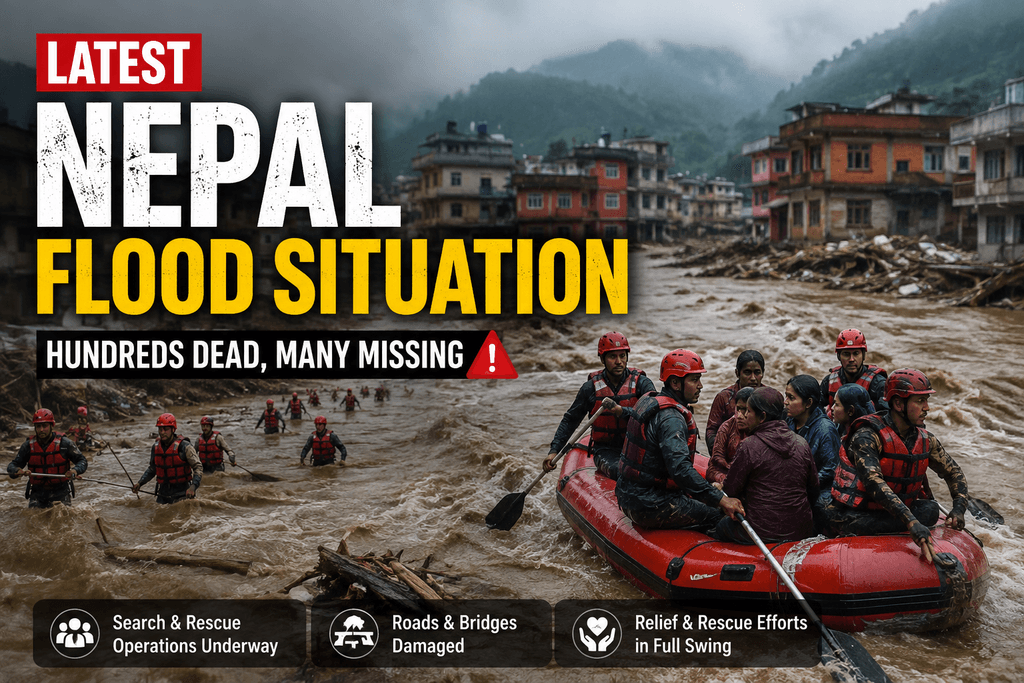
According to reports available on August 29, 2026, hundreds of people have lost their lives in the floods and related disasters, while many others remain missing.For official information about the Nepal flood, search and rescue operations, and affected districts, readers can refer to the Nepal Ministry of Home Affairs.
The situation is still developing, and the number of deaths and missing people may change as rescue teams continue their operations.
Authorities have deployed additional personnel to affected areas to search for missing people, rescue those trapped and move residents to safer locations.
In some areas, damaged roads and bridges have made rescue operations particularly difficult.
The Nepal Floods 2026 situation remains serious as rescue teams continue searching for missing people and helping communities affected by the disaster.
Rasuwa and Other Areas Badly Affected
Rasuwa and several other areas in northern Nepal have been seriously affected by the disaster.
In mountainous communities, floodwater has carried large amounts of mud, rocks and debris into residential areas. Homes and other buildings have been damaged, while roads and bridges have also suffered major destruction.
The damage to transportation networks has created additional problems for local residents.
Delivering food, drinking water and medical supplies to affected communities has become another major challenge for authorities and rescue teams.
Why Is the Rescue Operation Difficult?
Nepal’s mountainous geography has made the rescue operation much more challenging.
Road access in many mountain regions is already limited. When roads are blocked by floods or landslides, rescue teams cannot easily reach affected communities.
Another major challenge is the large amount of mud, rocks and debris left behind by the flood. People may still be trapped underneath these materials, making search operations difficult and time-consuming.
Rescue workers are also being forced to remain cautious because some areas could face additional flooding or landslides.
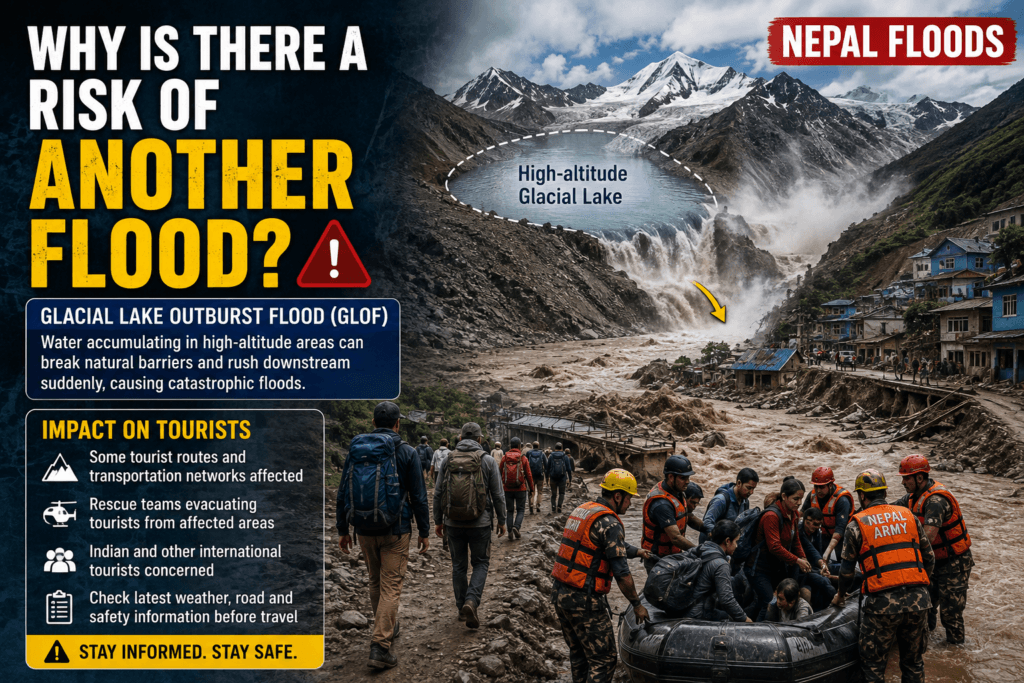
Why Is There a Risk of Another Flood?
One of the biggest concerns now is the amount of water accumulating in high-altitude areas.
In Himalayan regions, water can sometimes collect behind natural barriers or within glacial lakes. If such a barrier becomes unstable and breaks, a huge amount of water can suddenly rush downstream.
Such an event is known as a Glacial Lake Outburst Flood (GLOF).
Because of this risk, authorities need to closely monitor water levels and geological conditions in vulnerable Himalayan areas.
Impact on Tourists
Nepal is one of the world’s most popular destinations for mountain tourism. Thousands of tourists visit the country every year for trekking, mountaineering and trips to the Himalayan region.
The floods have affected some tourist routes and transportation networks. Rescue teams have also been involved in evacuating tourists from affected areas.
Indian tourists are among the many international visitors who travel to Nepal every year. As a result, the disaster has also created concern among families in India.
People planning to travel to Nepal should check the latest weather, road and local safety information before beginning their journey.
Why Is the Disaster Important for India?
Nepal and India share strong cultural, social and tourism connections.
Thousands of Indians travel to Nepal every year for tourism, religious visits and trekking. Therefore, a major natural disaster in Nepal can also affect Indian citizens and their families.
If Indian citizens are reported missing or stranded, families should rely on official information from the authorities and the Indian Embassy rather than unverified messages circulating on social media.
During a disaster, false information can spread quickly, so checking official updates is extremely important.
Is Climate Change Linked to the Floods?
The Himalayan region is one of the areas that is increasingly being affected by changes in climate and the environment.
Scientists have warned for years that rising temperatures, glacier changes and changes in mountain ecosystems could increase the risk of certain types of natural disasters in the future.
However, it would not be accurate to say that climate change alone caused the Nepal floods in 2026.
Natural disasters of this kind can involve several factors, including rainfall, glacier conditions, geological instability, river flow and landslides.
Understanding how these factors interact is important for improving disaster preparedness in the Himalayan region.
Major Impact on Nepal’s Economy
The floods have caused not only a major loss of human lives but also serious economic damage.
Roads, bridges, homes, electricity infrastructure and businesses may require extensive repairs or reconstruction.
Tourism is an important part of Nepal’s economy. If tourists avoid affected regions because of safety concerns, hotels, trekking agencies, transport operators, restaurants and local businesses could also experience financial losses.
Rebuilding damaged infrastructure could take months or even years.
Impact on Ordinary People
The real impact of a disaster cannot be measured only by the number of deaths.
Thousands of people may face problems such as losing their homes, searching for missing family members, losing their source of income and struggling to access basic services.
Food, clean drinking water, medicine and temporary shelter are among the most urgent needs in flood-affected communities.
Even after rescue operations are completed, rehabilitation and reconstruction could take a long time.
The effects of the Nepal Floods 2026 are being felt by families who have lost their homes, relatives and sources of income.
What Does Nepal Need Now?
Nepal needs both immediate emergency assistance and a long-term recovery plan.
The immediate priorities include finding missing people, treating injured residents, providing temporary shelter and delivering food, drinking water and medicine to affected communities.
At the same time, damaged roads and bridges need to be repaired, electricity services restored and vulnerable communities provided with better early-warning systems.
Long-term planning will be important to reduce the impact of similar disasters in the future.
What Can We Learn From Nepal Floods 2026?
The Nepal floods have once again highlighted the importance of disaster preparedness in the Himalayan region.
In the future, authorities will need to strengthen systems for monitoring glacial lakes, detecting floods early, using satellite technology and providing rapid warnings to communities living in high-risk areas.
It is much more effective to identify a potential disaster early and evacuate people before the situation becomes dangerous than to begin rescue operations only after a disaster has already occurred.
India, Nepal and other countries in the Himalayan region can also benefit from stronger cooperation and information sharing on weather conditions, floods and other natural hazards.
Final Words
The Nepal Floods 2026 are more than just a major flooding event. The disaster highlights the serious natural risks faced by communities living in the Himalayan region.
Hundreds of families have lost loved ones, while many others are still waiting for information about missing relatives. At this stage, finding missing people and providing immediate assistance to survivors remain the most important priorities.
The next major challenge for Nepal will be moving from emergency rescue operations toward rehabilitation and reconstruction.
Rebuilding damaged communities will require significant resources. At the same time, Nepal will need stronger early-warning systems and better disaster management plans to reduce the loss of life from similar events in the future.
Readers in Karnataka can also check our Karnataka SIR Voter List 2026 guide for the latest information about the draft electoral roll and voter verification.